
The resources exist. The connection doesn't.
Orange, Durham, and Chatham Counties are home to extraordinary institutions, thriving businesses, and deeply generous people. They are also home to a housing and stability crisis that grows larger every year and a support system that cannot move fast enough to prevent it.
Thousands of our neighbors are falling through the cracks.
3,000+ Experiencing Homelessness
Across Orange, Durham, and Chatham Counties, thousands of our neighbors are without stable housing on any given night and that number continues to rise. This estimate does not account for those on the edge of homelessnes because they cannot cover next month’s rent.
15,000+ Unit Housing Deficit
The gap between available affordable housing and what low-income residents need spans the same counties. The average cost of a one-bedroom apartment across our three-county region is $1,500–$1,800 per month which is out of reach for many of the families we serve.
80%+ Cost-Burdened Renters
Across all three counties, the vast majority of low-income renters are paying more than they can afford, leaving them one unexpected expense away from crisis. To afford a one-bedroom apartment in our region a household needs to earn $60,000 a year, far beyond what many of the people we serve earn.
Estimates based on regional housing and homelessness data and guidelines across Orange, Durham, and Chatham Counties.
The system takes weeks. Rent is due now.
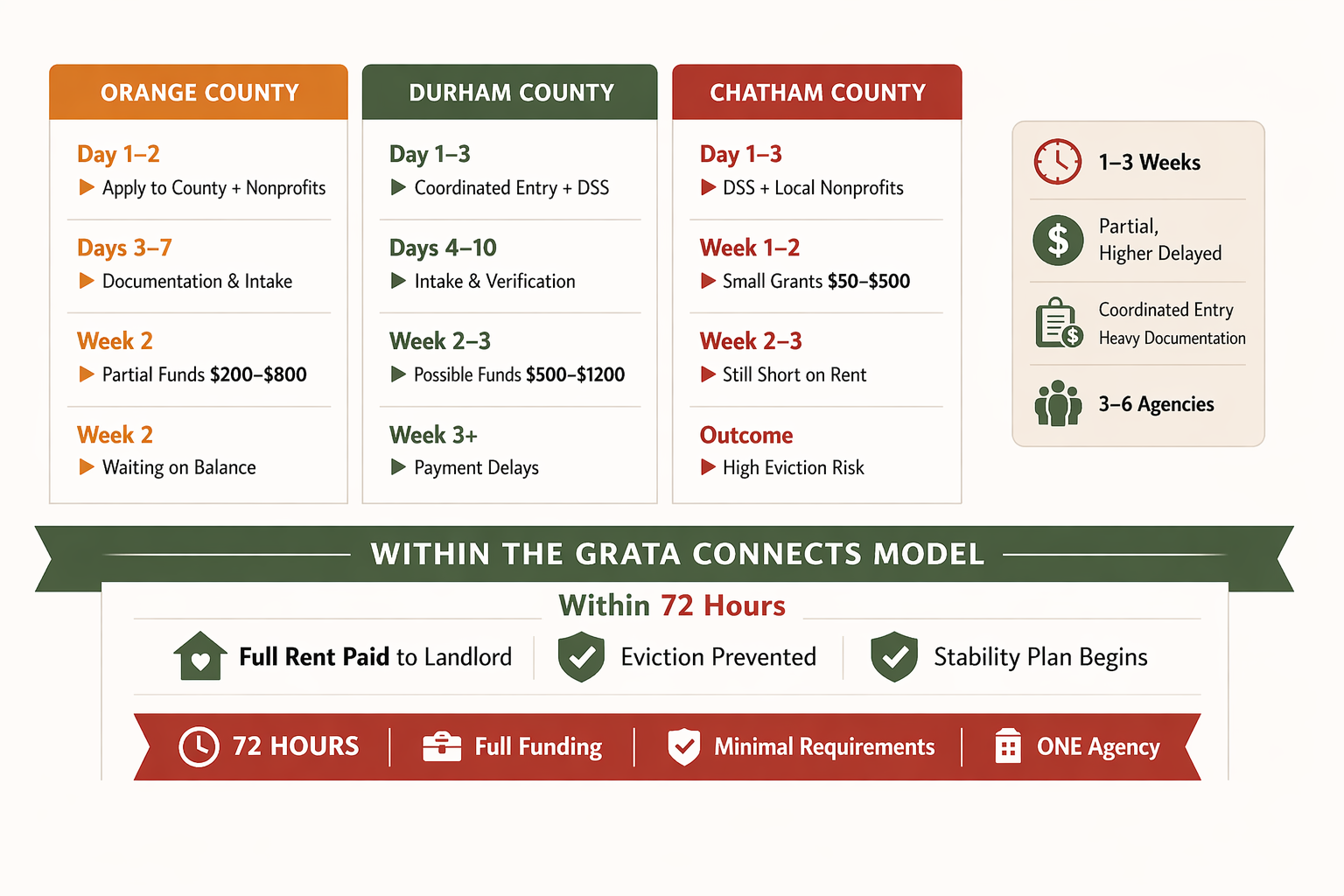
The support systems meant to help exist. But they were built for compliance, not speed. Here is what a rent crisis looks like in each county and what it looks like with Grata Connects.
$800 – $1,500 is the typical cost of a single intervention. One payment keeps one family housed. Every dollar is tracked and reported.
The Core Insight The difference between housing stability and eviction is almost never the amount of money available. It is whether that money arrives in time and in full.
Before the programs, there was the proof.
56 people housed.Self funded.No formal program.
Between August 2024 and December 2025, Grata Connects housed or kept housed 56 people in our community, before a single formal program existed. Most were kept in their homes through direct conversations with their landlords. Others were relocated to places where they could find a better path to stability.That work wasn't the result of a grant, funding, or infrastructure. It was the result of an entreprenurial mindset and a lifetime of lived experience surviving each day so another one can be lived.
The early work confirmed what we believed: that trusted relationships and direct community action can move people toward stability faster than any system alone.Now we are building the infrastructure to do it at scale. The Rapid Response Housing Stabilization Model is the formalized version of what worked in those 56 cases; just faster, better coordinated, and with more capacity. The Innovation Lab is where the next programs are being designed. Every program we build is grounded in what we heard from this community, and accountable to what it needs.